How to Light Coconut Coals: Complete Guide for Hookah & BBQ
Lighting coconut coals properly is essential for achieving consistent heat and optimal performance in hookah smoking and grilling. These natural coals require specific techniques and equipment to ignite safely and efficiently, typically taking 8-12 minutes to reach full temperature. This comprehensive guide covers all methods, safety precautions, and expert tips for lighting coconut coals successfully.
Understanding Coconut Coals and Their Properties
Coconut coals are compressed charcoal briquettes made from coconut shell husks, offering superior burn time and heat consistency compared to quick-light coals. These natural coals contain no chemical accelerants, making them safer for indoor use and providing cleaner flavor profiles. The density of coconut charcoal requires higher initial temperatures to ignite, typically around 600-800°F, but once lit they maintain steady heat for 60-90 minutes.
Quality coconut coals should be uniform in size, free from cracks, and produce minimal ash during burning. Popular brands in the US market include Coco Nara, Titanium, and CocoUrth, with prices ranging from $15-25 per kilogram as of 2024. The manufacturing process involves carbonizing coconut shells at high temperatures, then compressing the resulting charcoal powder with natural binding agents.
Electric Burner Method for Lighting Coconut Coals
An electric coil burner is the most popular method for lighting coconut coals indoors, providing consistent heat distribution and safety. Set the burner to high heat and place the coals directly on the coil, ensuring good contact for efficient heating. Most coconut coals will begin showing red edges after 4-5 minutes on a quality electric burner rated at 1500 watts or higher.
Turn the coals every 2-3 minutes using metal tongs to ensure even heating on all sides. The entire lighting process takes approximately 8-12 minutes, depending on coal size and burner efficiency. Coconut coals are fully lit when they glow orange-red throughout with no black spots remaining. Always use the burner in a well-ventilated area and never leave coals unattended during the lighting process.
Choosing the Right Electric Burner
Single-coil electric burners with adjustable temperature controls work best for lighting coconut coals, with recommended wattage between 1200-1800 watts for optimal performance. Flat-top electric stoves can also work but may take longer due to less direct contact. Avoid using glass-top stoves as the high heat required can damage the surface and void warranties.
Electric Burner Safety Tips
Always place the electric burner on a stable, heat-resistant surface away from flammable materials when lighting coconut coals. Keep a fire extinguisher nearby and ensure adequate ventilation to prevent carbon monoxide buildup. Never touch coals with bare hands and always use long-handled metal tongs designed for charcoal handling.
Gas Stove Method for Coconut Coal Lighting
Gas stoves provide excellent heat control and faster lighting times for coconut coals, making them ideal for quick preparation. Place coals directly on the gas burner grate and set flame to medium-high, ensuring proper air circulation around each coal. The open flame of gas stoves typically lights coconut coals 2-3 minutes faster than electric methods due to higher initial temperatures.
Use a wire rack or coal holder if your gas burner grates have wide spacing to prevent coals from falling through. Monitor the coconut coals constantly and rotate every 2 minutes for uniform heating. Gas stoves excel at lighting multiple coals simultaneously, making them efficient for larger hookah sessions or when preparing coals for groups.
Gas Stove Advantages and Considerations
Gas stoves offer precise temperature control and instant heat adjustment when lighting coconut coals, allowing for fine-tuning based on coal size and brand. The immediate heat reduction capability prevents overheating and extends coal life. However, ensure proper kitchen ventilation and never leave gas flames unattended during the coconut coal lighting process.
Multi-Coal Gas Stove Techniques
When lighting multiple coconut coals on a gas stove, arrange them with adequate spacing to ensure proper air circulation and even heating. Start with fewer coals and add more as needed, as overcrowding can lead to uneven lighting and extended preparation times.
Outdoor Methods for Lighting Coconut Coals
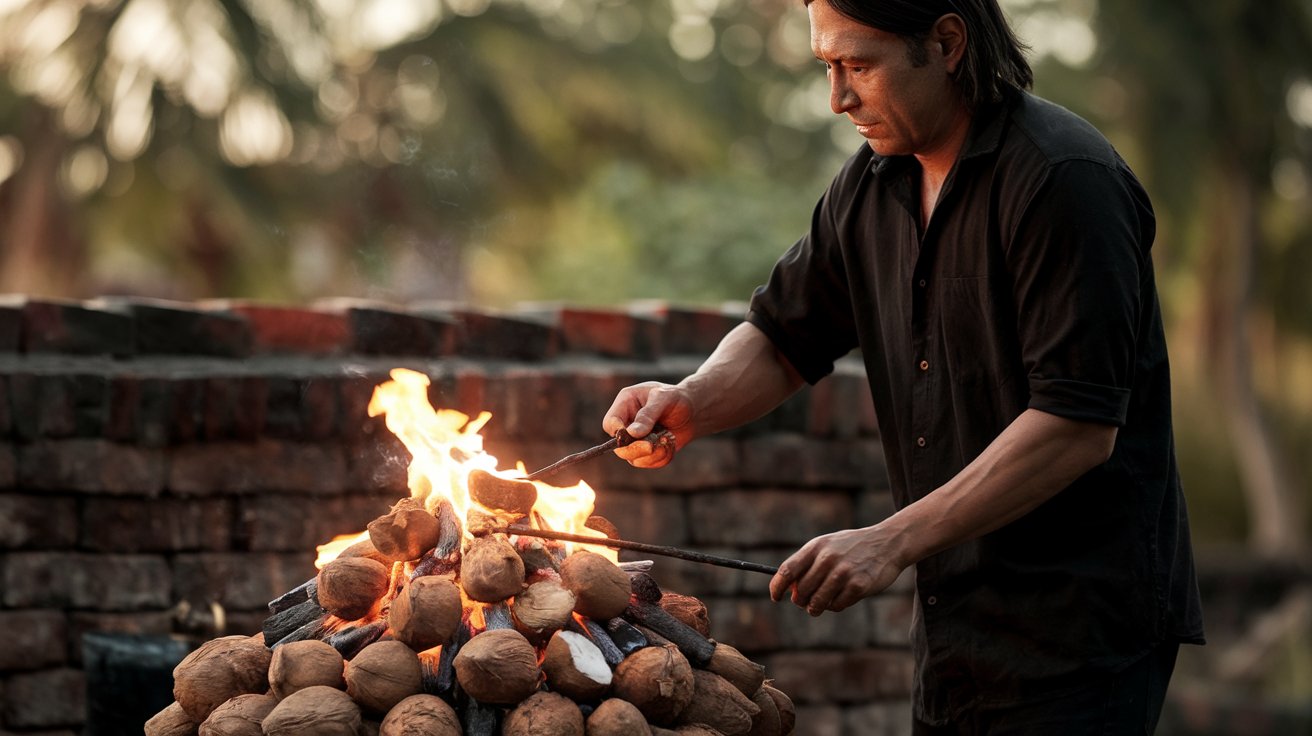
Outdoor lighting methods for coconut coals include charcoal chimneys, torch lighters, and traditional fire starters, each offering unique advantages for different situations. Charcoal chimneys provide the most efficient outdoor method, creating intense updraft heat that can light coconut coals in 6-8 minutes when properly loaded with newspaper and kindling.
Torch lighters work well for individual coals or small quantities, providing targeted heat application for precise lighting. Traditional fire starter methods using newspaper and kindling require more time but work effectively when other equipment isn’t available. Always conduct outdoor coconut coal lighting in safe areas away from structures, vegetation, and flammable materials.
Charcoal Chimney Technique
Fill the bottom section of a charcoal chimney with crumpled newspaper and place coconut coals in the upper chamber, ensuring proper spacing for air circulation. Light the newspaper from multiple points and allow the updraft to ignite the coals evenly. This method works exceptionally well for lighting large quantities of coconut coals simultaneously.
Torch Lighter Method
Butane torch lighters provide concentrated heat perfect for lighting individual coconut coals quickly and efficiently. Hold the torch 2-3 inches from the coal surface and move in circular motions to ensure even heating. This method offers excellent control but may require multiple torches for larger coal quantities.
Safety Precautions When Lighting Coconut Coals
Proper safety measures are crucial when lighting coconut coals due to the high temperatures and carbon monoxide production involved. Always ensure adequate ventilation in indoor spaces and never light coals in completely enclosed areas without proper air circulation. Keep windows or doors open and use exhaust fans when available to prevent carbon monoxide accumulation.
Wear heat-resistant gloves and use long-handled metal tongs exclusively for handling hot coconut coals. Keep a fire extinguisher rated for Class A fires within easy reach and maintain a safe workspace free from flammable materials. Never attempt to accelerate the lighting process with lighter fluid or other chemical accelerants, as this can create dangerous flare-ups and contaminate the coal surface.
Equipment and Tools for Coconut Coal Lighting
Essential equipment for safely lighting coconut coals includes metal tongs with 12-inch handles, heat-resistant work surfaces, and appropriate heat sources. Quality tongs should have secure gripping surfaces and comfortable handles that remain cool during use. Heat-resistant mats or trivets protect surfaces from damage and provide stable working areas for hot coconut coals.
A coal carrier or transport dish made from metal or heat-resistant ceramic allows safe movement of lit coconut coals from lighting area to hookah or grill. Digital timers help track lighting progress and prevent overheating. Additional useful tools include coal holders, ash disposal containers, and cleaning brushes for maintaining equipment in optimal condition.
Essential Tong Selection
Choose tongs specifically designed for coconut coal handling, featuring serrated gripping surfaces and insulated handles. Length should be minimum 10 inches to maintain safe distance from heat sources. Quality tongs invest in durability and safety, with prices ranging from $15-30 for professional-grade options in 2024.
Heat Source Selection Criteria
Select heat sources based on your specific needs: electric burners for consistent indoor use, gas stoves for quick lighting, and outdoor methods for larger quantities. Consider wattage ratings, temperature control capabilities, and safety features when choosing equipment for coconut coal lighting applications.
Timing and Temperature Guidelines
Proper timing is essential for achieving optimal results when lighting coconut coals, with standard cube-shaped coals requiring 8-12 minutes for complete ignition. Larger coals or flat varieties may need 12-15 minutes, while smaller pieces light in 6-8 minutes. The key indicator of fully lit coconut coals is uniform orange-red glow with no black spots remaining on any surface.
Internal coal temperature should reach approximately 800-900°F for optimal heat output and longevity. Premature removal from heat sources results in uneven burning and reduced performance. Allow coconut coals an additional 2-3 minutes after appearing fully lit to ensure complete activation throughout the entire coal structure.
Common Mistakes and Troubleshooting
The most frequent mistake when lighting coconut coals is insufficient heating time, resulting in partially lit coals that burn unevenly and produce less heat. Always allow complete lighting cycles and verify uniform glow before transferring coals. Overcrowding heat sources prevents proper air circulation and extends lighting times significantly for coconut coals.
Using inappropriate tools like aluminum tongs or wooden implements can create safety hazards and equipment damage. Attempting to rush the process with chemical accelerants contaminates coconut coals and creates dangerous conditions. If coals fail to light properly, check heat source functionality, coal quality, and ventilation conditions before troubleshooting further.
Identifying Quality Issues
Poor-quality coconut coals may crumble, produce excessive ash, or fail to maintain consistent heat output. High-quality coals should light evenly, maintain structural integrity, and burn for 60-90 minutes. Replace coals showing cracks, unusual odors, or inconsistent burning patterns.
Heat Source Problems
If coconut coals aren’t lighting properly, verify heat source temperature and functionality. Electric burners should glow red-hot, gas flames should be blue and consistent, and outdoor heat sources should provide adequate sustained temperature. Clean heat sources regularly to maintain optimal performance.
Related video about how to light coconut coals
This video complements the article information with a practical visual demonstration.
Frequently Asked Questions
How long does it take to light coconut coals properly?
Coconut coals typically require 8-12 minutes to light completely using electric burners or gas stoves. Outdoor methods may take 6-10 minutes with proper equipment. The exact time depends on coal size, heat source efficiency, and environmental conditions. Always ensure coals glow uniformly orange-red before use.
Can I light coconut coals on a glass-top electric stove?
It’s not recommended to light coconut coals directly on glass-top stoves as the high heat required can crack or damage the surface. Use a portable electric coil burner instead, which provides better heat distribution and protects your stove. Most glass-top stove warranties are voided by this type of use.
What’s the best way to tell when coconut coals are fully lit?
Fully lit coconut coals display uniform orange-red glow across all surfaces with no black spots remaining. They should maintain consistent color and not produce excessive sparking. The coals will also feel significantly lighter when lifted with tongs and produce steady, even heat when held near your hand.
Is it safe to light coconut coals indoors?
Yes, coconut coals can be safely lit indoors with proper ventilation and safety precautions. Always ensure adequate air circulation, use appropriate equipment, and never light coals in completely enclosed spaces. Keep windows open and use exhaust fans to prevent carbon monoxide buildup during the lighting process.
Why won’t my coconut coals light properly?
Common causes include insufficient heat source temperature, poor coal quality, inadequate heating time, or blocked air circulation. Ensure your heat source reaches proper temperature, use quality coals, allow complete lighting cycles, and provide adequate spacing between coals for proper airflow during lighting.
How many coconut coals should I light at once?
For standard hookah sessions, light 2-3 coconut coals initially, adding more as needed. Most heat sources can accommodate 3-4 coals simultaneously without overcrowding. For larger sessions or grilling applications, use charcoal chimneys or multiple heat sources to light larger quantities efficiently while maintaining safety standards.
| Lighting Method | Time Required | Best For |
|---|---|---|
| Electric Burner | 8-12 minutes | Indoor use, consistent results |
| Gas Stove | 6-10 minutes | Quick lighting, multiple coals |
| Charcoal Chimney | 6-8 minutes | Outdoor use, large quantities |
| Torch Lighter | 4-6 minutes | Individual coals, precision |